Everest Base Camp with Lobuche East Peak Climbing

Trip Days
14 Days
Max. Elevation
6,119 M
Lodging
teahouses
Difficulty
Hard
Meals
Breakfast, Lunch, Dinner
Transportation
Flight

Trip Overview

The Everest Base Camp Trek with Lobuche East Peak Climb is an adventurous journey that combines one of Nepal’s most famous treks with an exciting mountain climb. It is perfect for those who want to experience both the beauty of the Himalayas and the thrill of reaching a peak.

The trip starts with a short and scenic flight to Lukla, the main entry point to the Everest region. From there, trekkers walk through beautiful Sherpa villages such as Phakding, Namche Bazaar, Tengboche, and Lobuche. The trail passes through forests, rivers, suspension bridges, and open valleys, all surrounded by breathtaking mountain views of Everest, Lhotse, Ama Dablam, Nuptse, Cho Oyu, and Thamserku.

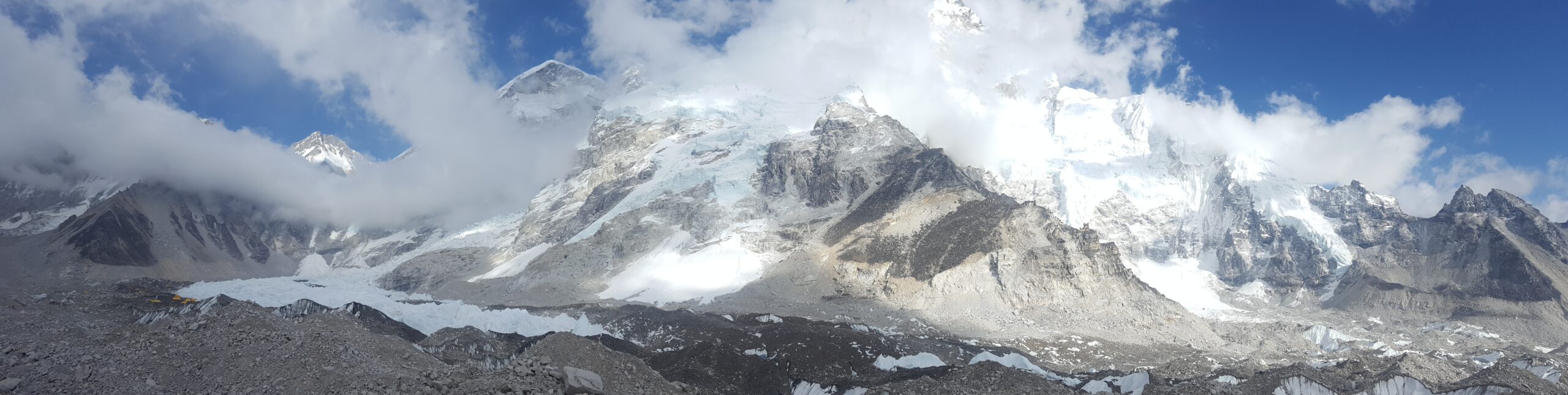
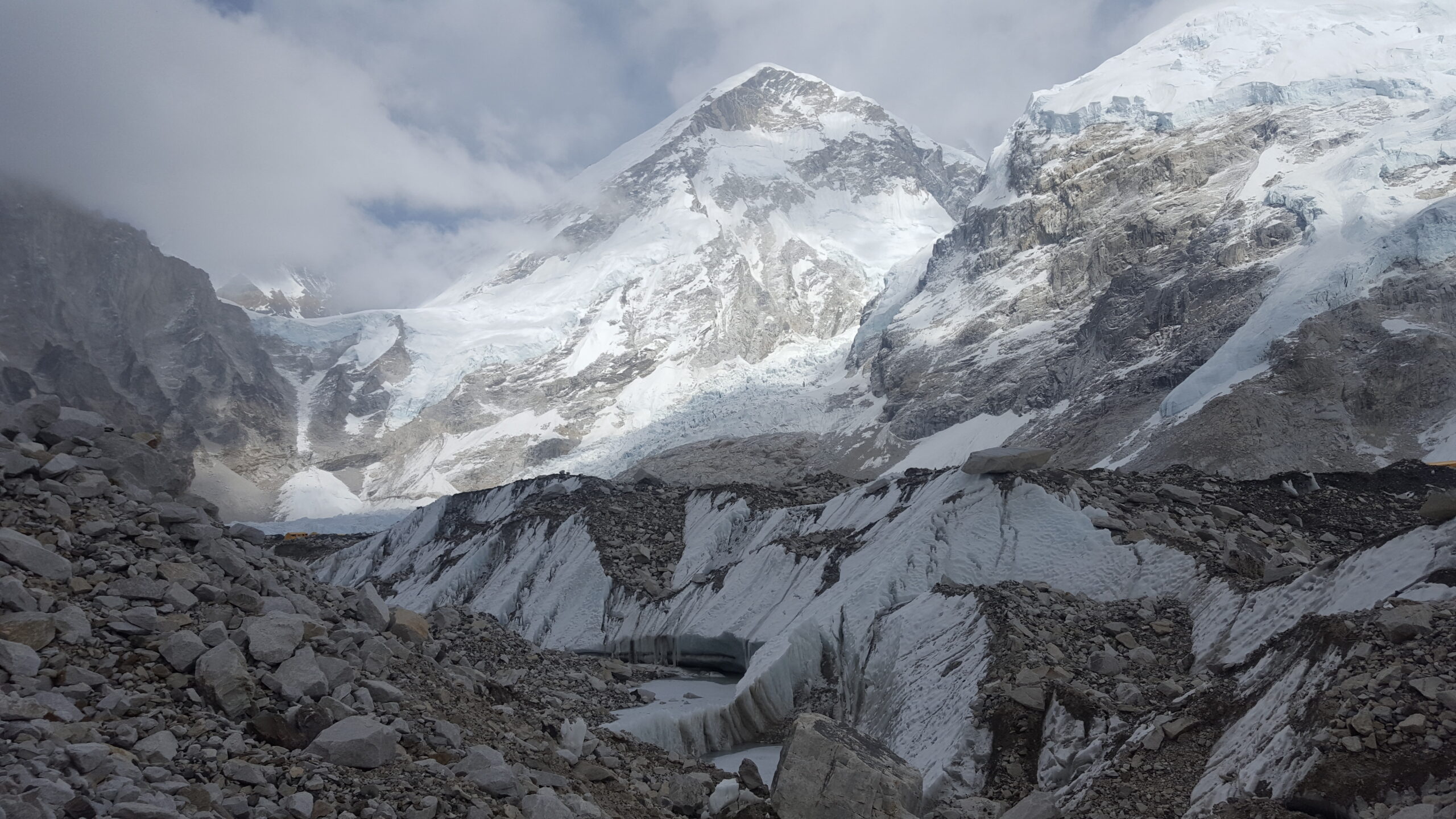
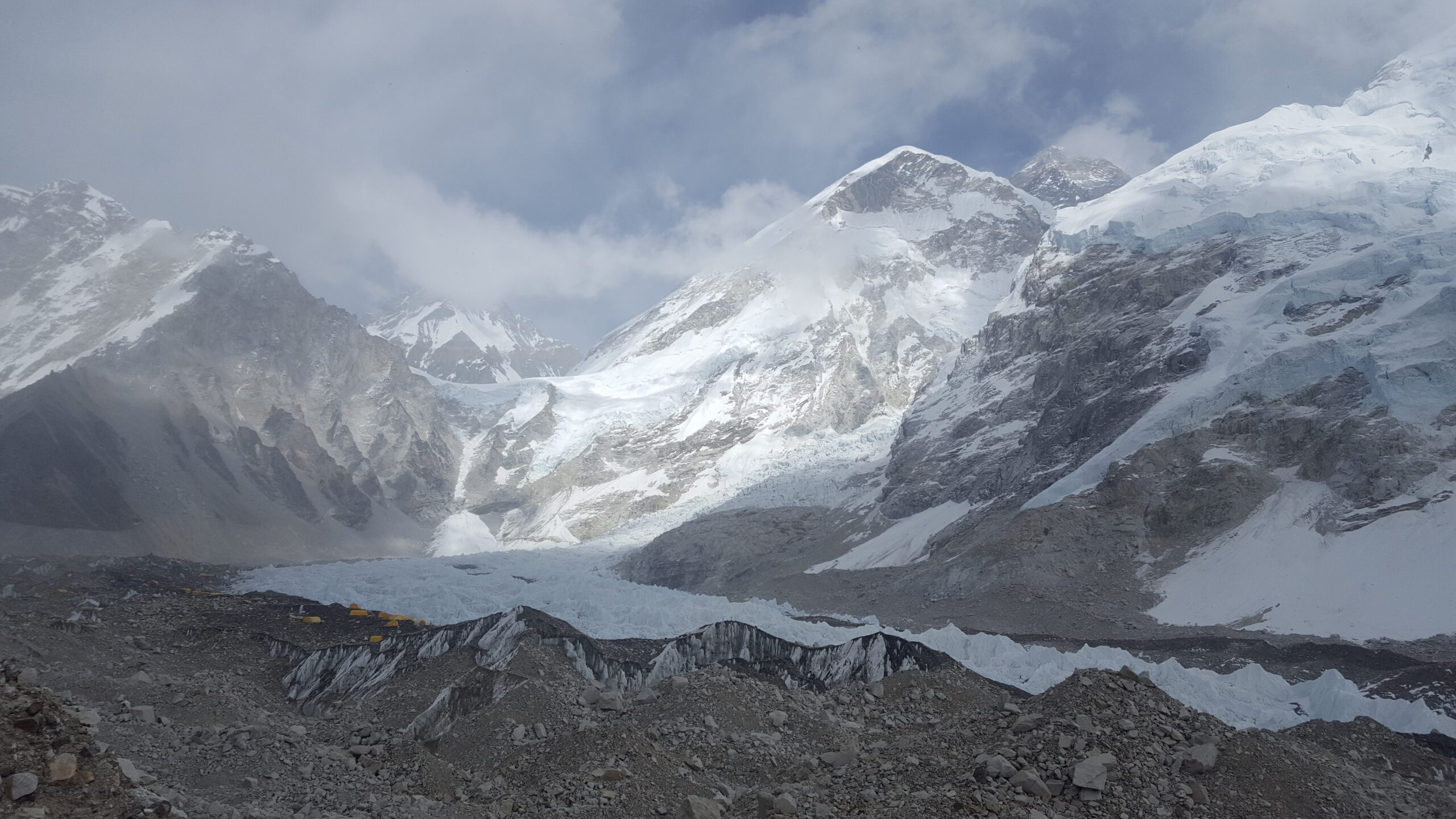
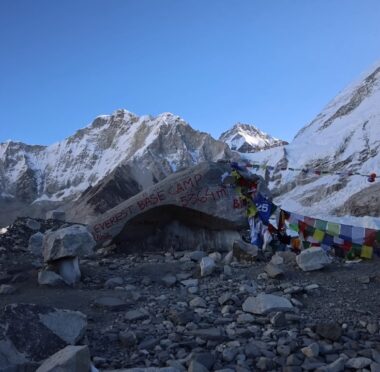
Reaching the Everest Base Camp (5,364 m) is a proud moment for every trekker. It offers close views of the Khumbu Glacier and Khumbu Icefall, along with a stunning panorama of snow-capped peaks. After exploring the base camp, the route continues toward Lobuche Base Camp for the next challenge — climbing Lobuche East Peak (6,119 m).

The climb involves walking over glaciers and snow ridges, making it a great introduction to real Himalayan mountaineering. From the summit, trekkers are rewarded with incredible views of Mount Everest, Lhotse, Makalu, and the entire Khumbu Valley.

On the way back, the trail retraces to Lukla, passing through familiar villages and giving time to enjoy the Sherpa culture, monasteries, and warm hospitality once more.

Overall, the Everest Base Camp Trek with Lobuche East Peak Climb offers an unforgettable experience filled with natural beauty, cultural encounters, and personal achievement. It is truly a journey of adventure, discovery, and inspiration.

Highlights of Everest Base Camp Trek with Lobuche East Peak Climbing

  • Stunning views of majestic mountain ranges, including Mt. Everest, Cho Oyu, Nuptse, and Thamserku.

  • Deep insight into the local Sherpa culture, traditions, and lifestyle.

  • Visit to ancient Tibetan monasteries, with the beautiful Ama Dablam peak as a backdrop.

  • Chance to see diverse Himalayan wildlife, birds, and alpine vegetation.

  • Spectacular sunrise view from Kala Patthar, offering close-up sights of Mt. Everest.

  • Exploration of traditional Himalayan villages and their spiritual and historical landmarks.

Itinerary

Day 01: Fly to Lukla and Trek to Phakding (2,620 m)

  • Phakding Altitude: 2,880 m

  • Walking Hours: 3–4 hours

  • Overnight: Lodge

After a scenic 30-minute flight from Kathmandu to Lukla, enjoy breathtaking views of snow-capped peaks and rolling hills. Upon arrival, have breakfast and begin the trek to Phakding. The trail descends through Chaurikharka village and follows the Dudh Koshi River, passing small settlements before gently climbing to Phakding, where we spend the night in a lodge.

Day 02: Phakding to Namche Bazaar (3,445 m)

  • Altitude: 3,440 m

  • Walking Hours: 5–6 hours

  • Overnight: Tea house

After breakfast, the trail follows the Dudh Koshi River, crossing several suspension bridges and passing villages like Manjo, the entrance to Sagarmatha National Park. After permit checks, the path continues through Jorsale before a steep uphill climb to Namche Bazaar. The final ascent is challenging but rewarding, as Namche offers stunning mountain views and comfortable tea houses for an overnight stay.

Day 03: Namche Bazaar – Acclimatization Day

To adapt to the higher altitude and reduce the risk of altitude sickness, we’ll spend an extra day in Namche Bazaar. In the morning, we’ll hike up to the Hotel Everest View for stunning panoramas of Mt. Everest, Ama Dablam, Thamserku, and Nuptse. After enjoying the views and breakfast, we’ll descend back to Namche. Those interested can also visit Khumjung Village nearby. Overnight stay at the same tea house.

Day 04: Namche Bazaar to Tengboche (3,870 m)

  • Altitude: 3,860 m

  • Walking Hours: 5–6 hours

  • Overnight: Tea house

Leaving Namche Bazaar, the trail gently ascends and descends through pine forests with beautiful mountain views. After about 20 minutes of easy walking, the path gradually descends to the river. Crossing the bridge, we begin a steady uphill climb for nearly two hours to reach Tengboche. The walk can be tiring due to altitude gain, so we take it slow, stopping for lunch along the way. On arrival, Tengboche welcomes us with breathtaking views of Ama Dablam, green hills, and the Imja River Valley. Overnight at a tea house.

Day 05: Tengboche to Dingboche (4,360 m)

  • Altitude: 4,260 m

  • Walking Hours: 6–7 hours

  • Overnight: Tea house

We start the day with a short visit to the Tengboche Monastery before heading toward Dingboche. The trail descends through forests and crosses the Imja River, then gradually climbs uphill through open valleys with beautiful mountain views. Passing small villages and meadows, we finally reach Dingboche, a peaceful settlement surrounded by stunning Himalayan scenery. Overnight at a tea house.

Day 06: Day Trip to Nagarjun (5,000 m) and Back to Dingboche

After a challenging trek to Dingboche, we take a rest day to acclimatize and explore Nagarjun Hill. After breakfast, we hike up steep rocky trails for about 2–3 hours to reach the viewpoint. From the top, we can enjoy breathtaking views of Ama Dablam, Lhotse, and the surrounding valleys. After spending some time admiring the scenery, we descend back to Dingboche, passing by chortens and small monasteries along the way. Overnight at a tea house.

Day 07: Trek to Lobuche (4,950 m)

  • Altitude: 4,930 m

  • Walking Hours: 5–6 hours

  • Overnight: Tea house

Leaving Dingboche, the trail begins with a steep climb offering spectacular views of Chukhung Valley and Island Peak. After the initial ascent, the path becomes mostly flat, passing a few small settlements where trekkers can stop for refreshments. After several hours of walking, we reach Lobuche, a scenic village, and our final stop before heading to the Everest Base Camp. Overnight at a tea house.

Day 08: Trek to Gorakshep (5,160 m) and Hike to Everest Base Camp (5,364 m)

  • Gorakshep Altitude: 5,164 m

  • Everest Base Camp Altitude: 5,364 m

  • Walking Hours: 6–8 hours

  • Overnight: Tea house

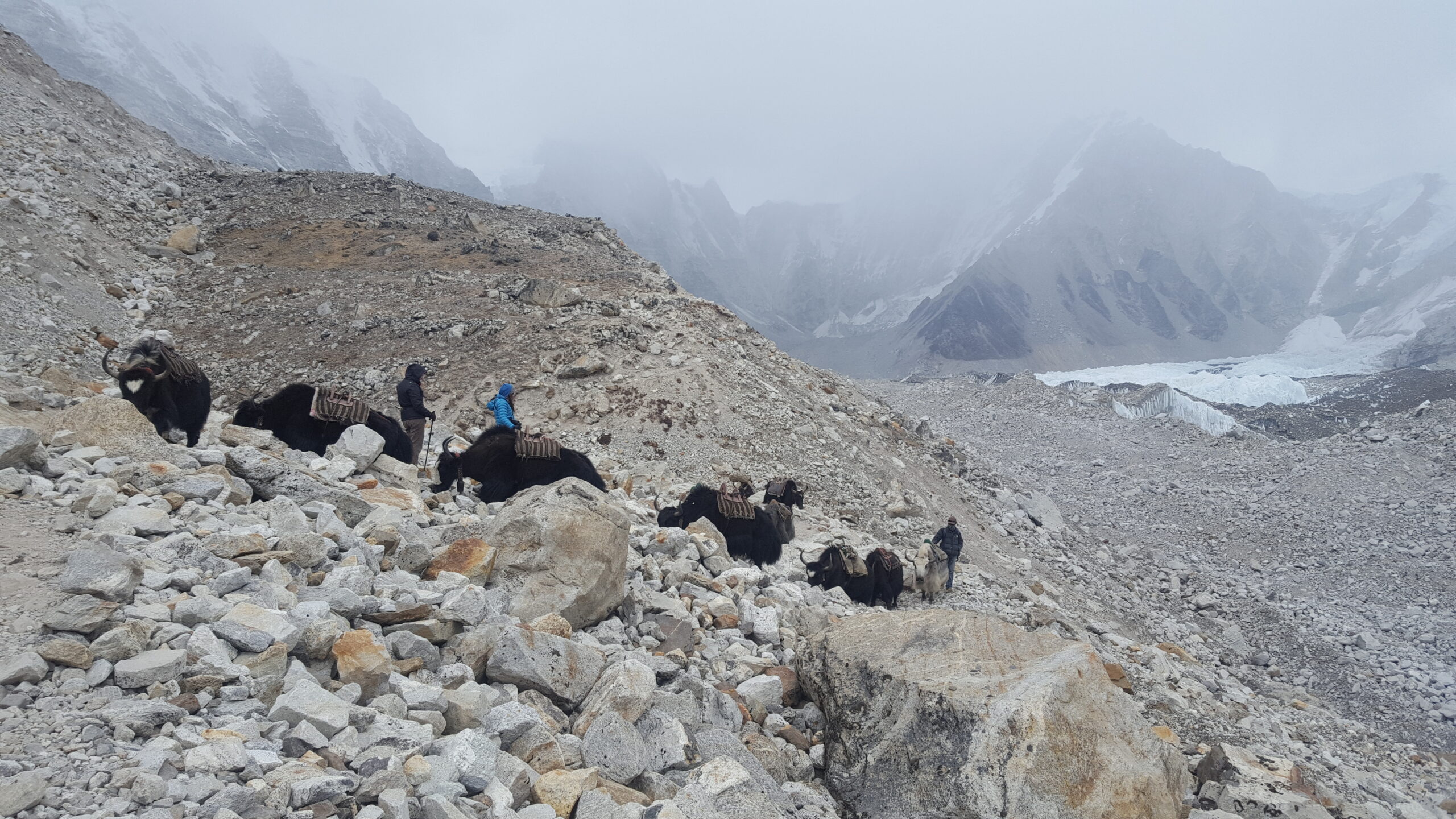
The trek from Lobuche to Gorakshep is about 4.5 km, but the high altitude and rocky terrain make it a 3–4 hour journey. The path is uneven, with loose rocks, leading to the small settlement of Gorakshep, where we take a short lunch break.

From Gorakshep, we continue for about three hours across glacial moraines and rocky trails to reach Everest Base Camp. Here, you’ll enjoy stunning views of Mt. Everest, Ama Dablam, Nuptse, and Cho Oyu, along with Khumbu Glacier and nearby serene lakes.

After exploring the base camp, we retrace our steps back to Gorakshep for an overnight stay at a tea house.

Day 09: Climb Kala Patthar (5,400 m) and Trek Down to Lobuche East Base Camp (4,950 m)

  • Kala Patthar Altitude: 5,644 m

  • Lobuche East Base Camp Altitude: 4,950 m

  • Walking Hours: 6–7 hours

  • Overnight: Tent

At sunrise, we start the trek to Kala Patthar, a steep 2–3 hour climb over rocky terrain and boulders. From the summit, enjoy panoramic views of Mt. Everest, Changtse, Nuptse, and the northern flank of Lhotse. The sunrise from here is truly breathtaking.

After soaking in the views, we descend back to Gorakshep for breakfast and then continue down to Lobuche East Base Camp at 4,950 m. The trail passes jagged terrain, crosses the Lobuche Glacier, and offers glimpses of Thamserku and Cholatse along the way. Upon arrival, tents are set up for an overnight stay at the base camp.

Day 10: Base Camp to Lobuche High Camp (5,400 m)

  • Altitude: 5,400 m

  • Walking Hours: 3–4 hours

  • Overnight: Tent

We start early to tackle the challenging trail from Lobuche Base Camp to Lobuche High Camp. The path is steep, rugged, and covered with snow, requiring careful navigation and the use of crampons for grip.

The climb involves ascending icy slopes and rocky sections with the aid of an ice axe. After steadily making our way up, we reach Lobuche High Camp at 5,400 meters, where we rest and spend the night, conserving energy for the climb the next day.

Day 11: Lobuche High Camp to Summit (6,119 m) and Trek Down to Pheriche

  • Altitude: 6,119 m

  • Walking Hours: 8–9 hours

  • Overnight: Tea house

The climb to Lobuche East Summit is challenging and technical, so we start before dawn. Using ice axes and ropes, we ascend snowy trails and glaciers under the guidance of our experienced guides.

After about 4 hours of steady climbing along steep ridges, we reach the summit, rewarded with breathtaking views of Ama Dablam, Cholatse, Thamserku, Kantega, and surrounding glaciers.

After enjoying the scenery, we descend back to Lobuche Base Camp and continue down to Pheriche. The downhill trek is easier and offers stunning views of snow-capped peaks and valleys. Overnight stay at a tea house.

Day 12: Pheriche to Namche Bazaar

After breakfast, we begin our descent from Pheriche through rhododendron forests, crossing the Dudh Koshi River several times and walking along wooded trails. Along the way, we may spot wildlife such as Thar, snow leopards, and musk deer.

After a steady downhill trek, we arrive at the charming Namche Bazaar, where we spend the night at a lodge, marking another memorable day of the Everest Base Camp Trek with Lobuche East Peak Climbing.

Day 13: Trek Down to Lukla

From Namche Bazaar, we begin the descent to Lukla, retracing the trail with a more relaxed pace and plenty of scenic views. The route follows the Dudh Koshi River Valley, passing through forests and small streams like Kusume.

As the trail gradually becomes steeper toward the west, we continue through Toktok and along unpaved paths until reaching Lukla, where we spend the night at a lodge in the Sherpa town.

Day 14: Lukla to Kathmandu

We say goodbye to Lukla and board our flight back to Kathmandu, which takes about 30 minutes. The journey offers stunning views of rolling hills, waterfalls, rivers, and quaint villages. Upon arrival at Tribhuvan International Airport, we will transfer you to your hotel for rest.

Includes/Excludes

What’s Included?

  • Three meals a day (breakfast, lunch, and dinner) with a cup of hot drink (tea/coffee).

  • Tea house accommodations during the trek.

  • Sagarmatha National Park entry permit and TIMS (Trekkers’ Information Management System) permit.

  • Peak climbing permit and other required fees.

  • 1–2 nights in twin-sharing tents after Lobuche, with hygienic meals, tea/coffee, and seasonal fruits.

  • Camping tents and climbing ropes are provided.

  • Kathmandu–Lukla–Kathmandu flights, including airport transfers (high season flights operate from Ramechhap Airport, 4–5 hours east of Kathmandu).

  • Experienced English-speaking trekking guide and climbing Sherpa, fully licensed by the government, with salary, food, drinks, accommodation, transport, and insurance included.

  • Strong porters (1 porter for 2 trekkers) with proper equipment, salary, food, drinks, accommodation, and insurance covered.

  • Comprehensive medical kit for first aid.

  • Emergency helicopter arrangements (cost covered by your travel insurance).

  • Oximeter to monitor pulse, oxygen saturation, and heart rate for altitude sickness (AMS) prevention.

  • Assistant guide for groups of 6 or more trekkers.

What’s Excluded?

  • Meals and hotel accommodation in Kathmandu.

  • Nepal entry visa fee: $50 USD for a 30-day visa on arrival.

  • Travel and medical insurance (highly recommended).

  • International airfare.

  • Personal expenses (hot shower, charging, internet).

  • Alcoholic and non-alcoholic drinks purchased on trek (tea houses offer drinks at your own cost).

  • Desserts and sweets such as chocolate, cake, pie, or pudding.

  • Battery charging and hot showers at tea houses.

  • Personal climbing equipment.

  • Tips for guides, porters, and drivers (tipping is customary).

  • Excess baggage over 15 kg for Lukla flights.

Useful Info

Best Time for Everest Base Camp & Lobuche East Peak Trek

The Himalayan weather can change quickly — from warm, sunny days to cold, stormy spells. Winter is very cold at high altitudes, while summer can be warm and wet. The clearest, most comfortable windows for trekking are spring (March–May) and autumn (September–November). Both seasons offer pleasant days, cooler nights, and excellent mountain views.

Spring (March–May)
Spring brings warmer days and longer daylight, making it easier to walk and explore. Early spring can still be chilly with occasional snow, but by late March, temperatures rise and trekking becomes more comfortable. Trails and forests burst into life — rhododendrons and wildflowers bloom, adding colour to the landscape. Spring is a great choice if you want mild weather and flowering scenery.

Autumn (September–November)
Autumn is the most popular season for the trek. After the monsoon, the sky becomes clear and visibility is excellent — perfect for photographing Everest and neighbouring peaks. Days are usually warm and sunny, while nights get quite cold. October is often the best month within this season for stable weather and bright views. Autumn trails are comfortable for hiking and the forests show rich colours, especially in October.

Both seasons are ideal — pick spring for flowers and longer days, or autumn for the clearest skies and the most reliable mountain views.

Off-Season — Not Recommended

Trekking to Everest Base Camp with Lobuche East in the off-season (monsoon and winter) is generally not a good idea — the weather makes the route much harder and more dangerous.

Winter (Dec–Feb)

  • From January, the cold intensifies (temperatures can fall to around −6 °C in lower areas and much colder higher up; Lobuche’s low can reach about −18 °C).

  • Heavy snow and blizzards are common. Trails become slippery or buried, increasing the risk of falls and frostbite.

  • While the frozen landscape and glaciers look stunning, travel and rescue options are limited.

Monsoon (Jun–Sep)

  • Heavy rain and strong winds make the path muddy and slippery, increasing landslide and trail-washout risks.

  • Visibility is often poor, though occasional breaks in the rain can clear the skies and give good mountain views.

  • Trail conditions are unreliable and uncomfortable for camping or higher-altitude climbing.

Difficulties of the Everest Base Camp Trek with Lobuche East Peak Climb

Combining the Everest Base Camp trek with a Lobuche East summit makes the route far more demanding than a regular trek. Below is a clear, easy-to-read summary of the main challenges.

1. Hard terrain & technical sections

The path includes steep sections, loose rocks, moraines and glacier travel. Climbing Lobuche East adds icy ridges and crevassed areas that require basic mountaineering skills and the use of ropes, crampons, and ice axes.

2. Altitude sickness (AMS)

At high elevations, the air has less oxygen, which can cause headache, nausea, dizziness, tirednes,s and sleeplessness. Proper acclimatization — walking higher but sleeping lower, taking rest days, and ascending slowly — is essential. If symptoms worsen, descending quickly is the safest action.

3. Unstable weather

Mountain weather can change fast: warm and sunny one moment, stormy and cold the next. Winter brings heavy snow and strong winds; the monsoon brings rain and slippery trails. Spring and autumn are generally more stable, but always expect sudden changes and reduced visibility at times.

4. Physical and mental demand

Long walking days, steep climbs, heavy packs, and cold nights test both stamina and morale. Good physical preparation, a steady pace, and proper rest help a lot.

5. Equipment & logistics

Because of snow and ice on higher sections, you need proper gear (warm clothing, waterproofs, crampons, ice axe, ropes). Battery charging, hot showers, and medical help are limited on the trail, so plan accordingly.

With preparation and caution, the challenges are manageable — and the rewards (views, culture, achievement) are enormous.

FAQ

What personal gear should I bring?

Warm down jacket, insulated sleeping clothes, trekking boots, crampons, ice axe (for climbing), thermal layers, hat, gloves, sunglasses, sunscreen, water bottle, basic first aid, headlamp, toiletries, and personal meds.

What are the main risks?

Do I need travel insurance? What should it cover?

When is the best time to do the trek?

Is it possible to do Gokyo Lakes, Everest Base Camp (EBC) and climb Lobuche East in one trip?

How many days does the combined (EBC +Gokyo+Lobuche peak) trip take?

How hard is the combo (EBC+Gokyo+Lobuche Peak)?

Related Post

Everest Luxury Helicopter Tour

Everest Luxury Helicopter Tour

A Complete Guide for Gokyo Lake Trek

A Complete Guide for Gokyo Lake Trek

Everest Base Camp Yoga Trek for a Solo Traveler

Everest Base Camp Yoga Trek for a Solo Traveler

Atithi Devo Bhava - Guest is God
Atithi Devo Bhava
- Guest is God

Other Packages

Enquire Now